










AKNEWS | 16.02.2012
Religion involved in violence against women
The law for combating domestic violence is one of the most significant laws that Kurdistan...
Kirkuk Now | 08.02.2012
WADI: 50% of Kirkuk women circumcised
In its latest report on FGM, the German WADI says the circumcised women are facing...
WADI | 18.01.2012
1st ever conference on FGM in Middle East
FGM not merely an African problem; high rates in the Middle East...
IRIN NEWS | 13.01.2012
Link between FGM/C and mental disorders
New data out of Iraq shows what many psychologists suspected though little research has...
EYE SEE MEDIA | 08.11.2011
Iraqi Kurdistan: Free yourself from FGM – A new approach
In a remote village called Toutakhel, hidden amidst the endless hills of Kurdish...
HUDSON NEW YORK | 18.08.2011
Female Genital Mutilation "An Obligation" According to Iraqi Muslim Cleric
In June, the parliament of Iraq's autonomous Kurdistan Regional Government (KRG) adopted a...
STOP FGM - the BLOG | 15.08.2011
Female Genital Mutilation “is an obligation” says Mullah
A mullah in Iraqi-Kurdistan talked in a Friday sermon about the new bill against domestic violence...
Human Rights Watch | 25.07.2011
Iraqi Kurdistan: Law Banning FGM a Positive Step
Bill Shows Commitment to End Violence Against Women...
AKNEWS | 23.06.2011
Ban on female genital mutilation passed
For the first time in Iraqi Kurdistan women are protected by a new law against some of...
AKNEWS | 19.06.2011
Bill to ban female genital mutilation before parliament
The Kurdistan parliament will discuss a bill on domestic violence tomorrow, which proposes the...
kurdish globe | 17.04.2011
Campaign to end the pain
A health awareness campaign becomes a stepping stone to a FGM-free generation...
US STATE DEP. | 08.04.2011
2010 Human Rights Report Iraq
Female genital mutilation (FGM) is not illegal and is a common practice particularly in the rural...
sargasso | 18.02.2011
"Vrouwenbesnijdenis vooral een probleem in moslimlanden"
Thomas von den Osten-Sacken van de Iraaks-Duitse mensenrechtenorganisatie...
RUDAW.nET | 05.02.2011
Female Circumcision Prohibited Says Islamic Law Professor
Dr. Mustafa Zalmi, a leading Kurdish Shariah law expert, has said female circumcision...
HUDSON NEW YORK | 06.12.2010
Iraqi Kurdistan Confronts Female Genital Mutilation
As reported to the Centre for Islamic Pluralism by the non-governmental organization...
rudaw.net | 01.12.2010
Government Says 41 Percent of Kurdish Women Are Circumcised
A survey by the Kurdistan Ministry of Health shows that 41 percent of women have gone under the...
Aswat Al Iraq | 28.11.2010
41% of women in Iraq’s Kurdistan circumcised – survey
Some 41% of the women in the Iraqi Kurdistan Region were circumcised, a survey conducted...
RUDAW.net | 27.11.2010
Kurdistan Takes Measures Against Gender-Based Violence
As Kurdistan is fast progressing, becoming democratized and westernized, it faces serious...
AKNEWS | 31.10.2010
Demand to outlaw female circumcision in Kurdistan
The Kurdistan Health Ministry has planed for a conference on female circumcision practice in...
Human Rights Watch | 30.08.2010
Fighting Female Genital Mutilation
In Iraqi Kurdistan, 40 percent of women and girls between the ages of 14 and 22 have been...
AKNEWS | 23.08.2010
Painting exhibition to campaign against FGM in Kurdistan
A painting exhibition was opened in Qaladze town on Sunday, 135 km north east of Sulaimaniya...
FACEBOOK.COM | 15.08.2010
Kurdish Cleric defends FGM as religious practice
Surgeon: Types 1 and 2 of FGM are medically permissible...
FACEBOOK.COM | 13.08.2010
FGM - The Unsolved Riddle?
FGM has attracted a lot of attention after the publication of the HRW report, which came...
AKNEWS | 02.08.2010
Religious fatwa on FGM prcatices may have negative consequences, says NGO
The representative of a German nongovernmental organization, WADI, stated the issued Fatwa...
RUDAW.NET | 02.08.2010
Circumcised Girls Have Less Marriage Chance in Kurdistan
Muhammed Hassan, 22, is a single man who says one of the qualifications that his girlfriend...
guardian | 05.07.2010
The razor and the damage done: female genital mutilation in Kurdish Iraq
Mixture of motives persuades villages to maintain practice that often leaves lasting effects on...
time.com | 30.06.2010
Report: Female Circumcision in Iraqi Kurdistan Still High
For many young girls in the world, a life-changing experience might be reaching puberty or...
GLOBALPOST | 21.06.2010
Shocking statistics on "female genital mutilation"
Female circumcision a good idea? Ask 73 percent of Kurdistani women...
DAILYBEAST.COM | 17.06.2010
The Plight of Women in Northern Iraq
Violence in Iraq has abated. But in Kurdistan in the north, women continue to suffer. A new report...
New york times | 16.06.2010
Kurdistan Is Urged to Ban Genital Cutting
SULAIMANIYA, Iraq: Human Rights Watch urged Kurdistan’s government on Wednesday to...
Los angeles TIMES | 16.06.2010
Human Rights Watch slams high rates of female genital excision in Iraqi Kurdistan
“I still feel the fear,” Runak recalled as she told her story of undergoing genital excision at...
Human Rights Watch | 16.06.2010
Iraqi Kurdistan: Girls and Women Suffer Consequences of Female Genital Mutilation
Kurdistan Regional Government Should Outlaw the Practice...
Human rights watch | 15.06.2010
Pictures about FGM in Kurdistan and the work of WADI
A significant number of girls and women in Iraqi Kurdistan suffer femalegenital mutilation (FGM)...
The lancet | 06.03.2010
Reports focus on female genital mutilation in Iraqi Kurdistan
Campaigns against female genital mutilation have mainly targeted African nations, where most...
UNHCR | 03.03.2010
Women's Rights in Middle East and North Africa 2010: Iraq
Iraqi women's rights advocates, men and women alike, began their struggle for equality...
HUDSON NEW YORK | 03.03.2010
"Such Hadiths Are Not Confirmed To Be Authentic"
The repellent and, in too few countries, prohibited, practice of female genital mutilation (FGM)...
DE Volkskrant | 24.02.2010
Meerderheid van Koerdische vrouwen in Irak is besneden
Besnijdenis van meisjes komt op grote schaal voor onder de Koerden in het noorden... (dutch)
The Kurdish Globe | 21.02.2010
FGM, once a taboo now a breached silence
Encouraged by houses built by the KRG, Kulajo residents return home...
IWPR.NET | 11.02.2010
Female Circumcision Ban Urged
New survey reveals that majority of women in Kurdistan have undergone genital mutilation...
RUDAW.NET | 24.01.2010
HRW: Kurdistan fails to combat female circumcision
The recent 20th annual World Report of Human Rights Watch criticizes the Kurdistan Regional...
STOP FGM BLOG | 21.01.2010
The latest Human Rights Watch World Report
Human Rights Watch mentions FGM in Iraqi-Kurdistan twice in its latest World Report...
KAMEEL AHMADY | 01.2010
A message from Iran
I have a message from Iran for you, written in a simple language, away from the many big words...


HUMAN RIGHTS WATCH | 25.07.2011. original text

Iraqi Kurdistan: Law Banning FGM a Positive Step

Bill Shows Commitment to End Violence Against Women

(Beirut) - A Kurdistan Regional Government (KRG) law that bans female genital mutilation (FGM) is a crucial step in eradicating the practice, Human Rights Watch said today. The Family Violence Bill, approved by the Kurdistan parliament on June 21, 2011, includes several provisions criminalizing the practice, recognized internationally as a form of violence against women. Several studies by the government and non-governmental organizations estimate that the prevalence of FGM among girls and women in Kurdistan is at least 40 percent.

"By passing this law, the Kurdistan regional government has shown its resolve to end female genital mutilation and to protect the rights of women and girls," said Nadya Khalife, Middle East women's rights researcher at Human Rights Watch. "But the government needs a long-term strategy to deal with this harmful practice because criminalizing it is not enough."

The Family Violence Bill also criminalizes forced and child marriages, verbal, physical, and psychological abuse of girls and women, child abuse, and child labor. The bill has to be ratified by the president of the Kurdistan Regional Government.

The new law provides for establishing special courts for family violence cases and makes it easier for alleged victims to press charges. It also establishes mechanisms for police and courts to issue and enforce restraining orders to protect victims of domestic abuse. The bill also outlines penalties, including prison sentences, for these crimes.

Article six of the law includes four provisions about female genital mutilation, criminalizing the practice and penalizing anyone, including medical professionals and midwives, who "instigate, assist, or carry out" the procedure. Criminal penalties include prison terms ranging from six months to three years, in addition to fines of up to 10 million dinars ($8,500).

In June 2010, Human Rights Watch issued a report, "They Took Me and Told Me Nothing: Female Genital Mutilation in Iraqi Kurdistan," which urged the Kurdistan Regional Government and the Kurdistan parliament to take a series of steps to end the practice, including enacting laws banning it.  

The report noted while it was important to pass legislation with appropriate penalties for people who perform the procedure, the government should also provide appropriate services for victims, including  health care and social and psychological support. The report urged the government to work with community midwives, who most often do the cutting, and to undertake public awareness campaigns against the practice. Human Rights Watch also called on the regional government to develop a comprehensive legal and policy framework with relevant ministries and civil society organizations aimed at eradicating the practice.

Human Rights Watch's report describes the experiences of young girls and women who undergo genital mutilation and the terrible toll it has on their physical and mental health. The report includes interviews with girls and women who referred to the practice as "sunnah," a non-obligatory act to strengthen one's religion. Human Rights Watch found that women are confused about whether the practice is a religious obligation.

On July 6, 2010, The High Committee for Issuing Fatwas at the Kurdistan Islamic Scholars Union, the highest Muslim religious authority in Iraqi Kurdistan on religious pronouncements and rulings, issued a fatwa, or religious edict, shortly after the release of Human Rights Watch's report. The fatwa stated that female genital mutilation predates Islam and is not required by it. The fatwa did not explicitly ban the practice but encouraged parents not to have the procedure performed on their daughters because of the negative health consequences.

In 2010, the Association for Crisis Assistance and Development Co-operation (WADI), a German-Iraqi human rights nongovernmental organization, published a statistical study on the prevalence of the practice in Arbil, Sulaimaniya, and the Germian/Kirkuk region. It found that out of the 1,408 girls and women age 14 and over it interviewed, 72.7 percent had undergone the practice. For the 12 to 24 age group, the prevalence was slightly over 40 percent.

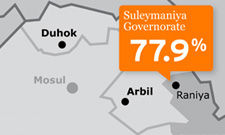
Shortly after the Human Rights Watch report was issued, the Kurdistan Health Ministry surveyed 5,000 women and girls and found that 41 percent had undergone the procedure, and that the practice is prevalent in some regions than others in Kurdistan. The ministry found, for example, that the rate was higher in Sulaimaniya than in Arbil.

Female genital mutilation violates the rights of women to life, health and bodily integrity, non-discrimination and the right not to be subjected to cruel, inhuman and degrading treatment. In addition, since the practice predominantly affects girls under 18, it also violates children's rights to health, life, physical integrity, and non-discrimination.

"Once the ban is in effect, government agencies should widely disseminate information on the new law making sure it reaches women and girls at risk of FGM," Khalife said. "Everyone should now know that the mutilation of girls is prohibited."