












Our Common Goal: Banning FGM Effectively
In the few years since it has been launched, the campaign »Stop FGM in Kurdistan« has created the conditions for an effective struggle against female genital mutilation (FGM) in Kurdish northern Iraq.
Mobile Teams are on the road every day, raising awareness and collecting data. In some areas where WADI has been active against FGM and other forms of violence for years the FGM rate among young girls has dropped considerably.
»Stop FGM in Kurdistan« is a network of local and international organizations, human rights activists, artists and journalists. Supported by local media, the campaign succeeded in mobilizing the public and initiating a – hitherto unthinkable – public debate. In 2011 finally the Kurdish Parliament adopted a comprehensive law against many forms of violence against women and children, including female genital mutilation. Since then the campaign is mainly focusing on the implementation of this law.
Iraqi Kurdish media address FGM
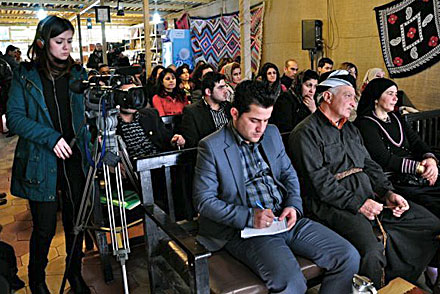
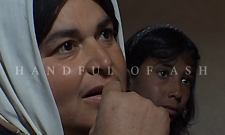
Today, unlike every other Middle Eastern country, people in Iraqi Kurdistan discuss FGM openly in the newspapers, in radio and TV shows and on the streets. It has not always been this way. Through awareness and advocacy initiatives, the campaign »Stop FGM in Kurdistan« succeeded in breaking a taboo, making FGM a widely discussed issue. Information about the consequences of FGM is now available to everyone: pain and suffering, physical and psychological harms, life-long anxiety and loss of ability to feel sexual sensations. FGM is now a recognized problem among the Kurdish public and the local authorities. TV stations show documentaries and large newspapers like »Hawlati« and »Awena« address the issue in articles and reports. In 2013 the BBC informed the whole world through airing two documentaries.
Mobile Teams work in remote areas
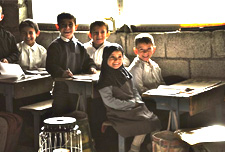
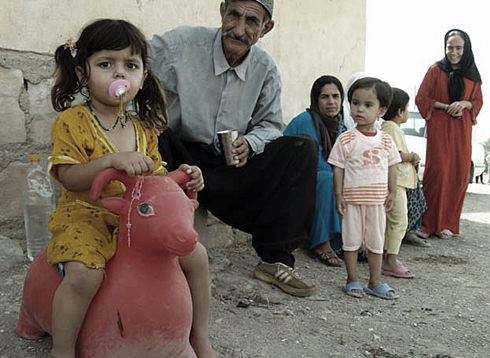
The relief organization WADI is supporting women-led mobile teams which raise awareness on FGM and provide concrete help to the villagers. The teams are visiting villages and schools mainly in rural areas where the education level of women is low and this kind of aid usually is not available.
The teams work in remote areas in Suleimaniyah, Halabja, Pishder, Qandil and Garmyan. They consist of a doctor/nurse and a social worker or psychologist. The concept is effective and sustainable: On the one hand the teams provide practical help (medical emergency aid, sanitary products, toys) and offer social counseling and concrete help for women in need. On the other hand they are gradually creating a trustful relationship to the women which allows them to raise issues like women’s rights, violence against women, sexuality, and FGM. They leave no doubt they stand by the villagers, and in case of good cooperation they will defend the interests of the village.
Through their continuous work the teams are very much trusted among the villagers in the operation areas. They are listened to, and they are able to change minds. According to their experience actually many women would like to protect their daughters from FGM, but lack sufficient support to resist the enormous social pressure. The mobile teams are able to encourage and support these women.
All teams are closely cooperating with the local women’s centers and shelters.
FGM-free communities
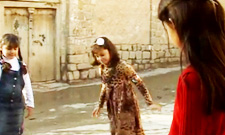
Since 2011, seven Iraqi Kurdish villages in different regions have declared themselves FGM-free and joined a common network. All villages sticked to their promise – not a single girl in these villages has been mutilated since then. As a compensation the villages received small community rehabilitation projects according to their wishes, like power generator, community tent, street trees, and pupil transportation to the next school.
Important: The decision to abandon the practice was not linked to prospective projects. People not convinced of the righteousness of their decision could not be bought over with such comparably small projects. The projects just encouraged them to make this step publicly.
This programme has received considerable media attention on local and international levels. Reuters made the world familiar with the moving story of the small village Toutaqal.
The programme was supported by the U.S. State Department.
Comprehensive study presented
In 2010 WADI presented a large empirical study on FGM in the Kurdish region which received much attention worldwide. The UN reacted and included Northern Iraq to its list of FGM-affected countries. Human Rights Watch presented its own study on the issue. Since that time the existence of FGM in Kurdistan could not be denied any more.
Another study conducted in 2012 proved that FGM is not only a Kurdish problem. In Kirkuk (Central Iraq) 38% of all women were found to have undergone FGM. The results suggest that FGM may be practiced throughout Iraq.
Today, FGM in Kurdistan is not longer a silenced problem. It is increasingly common knowledge that FGM is being practiced in the Middle East. Now, having passed the major obstacle of breaking the silence, we hope for more international support in our the struggle against this brutal and inhuman practice.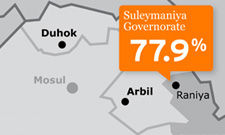
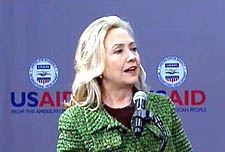 Clinton: 'Cultural Tradition' is No Excuse for Female Genital Mutilation