











AKNEWS | 16.02.2012
Religion involved in violence against women
The law for combating domestic violence is one of the most significant laws that Kurdistan...
Kirkuk Now | 08.02.2012
WADI: 50% of Kirkuk women circumcised
In its latest report on FGM, the German WADI says the circumcised women are facing...
WADI | 18.01.2012
1st ever conference on FGM in Middle East
FGM not merely an African problem; high rates in the Middle East...
IRIN NEWS | 13.01.2012
Link between FGM/C and mental disorders
New data out of Iraq shows what many psychologists suspected though little research has...
EYE SEE MEDIA | 08.11.2011
Iraqi Kurdistan: Free yourself from FGM – A new approach
In a remote village called Toutakhel, hidden amidst the endless hills of Kurdish...
HUDSON NEW YORK | 18.08.2011
Female Genital Mutilation "An Obligation" According to Iraqi Muslim Cleric
In June, the parliament of Iraq's autonomous Kurdistan Regional Government (KRG) adopted a...
STOP FGM - the BLOG | 15.08.2011
Female Genital Mutilation “is an obligation” says Mullah
A mullah in Iraqi-Kurdistan talked in a Friday sermon about the new bill against domestic violence...
Human Rights Watch | 25.07.2011
Iraqi Kurdistan: Law Banning FGM a Positive Step
Bill Shows Commitment to End Violence Against Women...
AKNEWS | 23.06.2011
Ban on female genital mutilation passed
For the first time in Iraqi Kurdistan women are protected by a new law against some of...
AKNEWS | 19.06.2011
Bill to ban female genital mutilation before parliament
The Kurdistan parliament will discuss a bill on domestic violence tomorrow, which proposes the...
kurdish globe | 17.04.2011
Campaign to end the pain
A health awareness campaign becomes a stepping stone to a FGM-free generation...
US STATE DEP. | 08.04.2011
2010 Human Rights Report Iraq
Female genital mutilation (FGM) is not illegal and is a common practice particularly in the rural...
sargasso | 18.02.2011
"Vrouwenbesnijdenis vooral een probleem in moslimlanden"
Thomas von den Osten-Sacken van de Iraaks-Duitse mensenrechtenorganisatie...
RUDAW.nET | 05.02.2011
Female Circumcision Prohibited Says Islamic Law Professor
Dr. Mustafa Zalmi, a leading Kurdish Shariah law expert, has said female circumcision...
HUDSON NEW YORK | 06.12.2010
Iraqi Kurdistan Confronts Female Genital Mutilation
As reported to the Centre for Islamic Pluralism by the non-governmental organization...
rudaw.net | 01.12.2010
Government Says 41 Percent of Kurdish Women Are Circumcised
A survey by the Kurdistan Ministry of Health shows that 41 percent of women have gone under the...
Aswat Al Iraq | 28.11.2010
41% of women in Iraq’s Kurdistan circumcised – survey
Some 41% of the women in the Iraqi Kurdistan Region were circumcised, a survey conducted...
RUDAW.net | 27.11.2010
Kurdistan Takes Measures Against Gender-Based Violence
As Kurdistan is fast progressing, becoming democratized and westernized, it faces serious...
AKNEWS | 31.10.2010
Demand to outlaw female circumcision in Kurdistan
The Kurdistan Health Ministry has planed for a conference on female circumcision practice in...
Human Rights Watch | 30.08.2010
Fighting Female Genital Mutilation
In Iraqi Kurdistan, 40 percent of women and girls between the ages of 14 and 22 have been...
AKNEWS | 23.08.2010
Painting exhibition to campaign against FGM in Kurdistan
A painting exhibition was opened in Qaladze town on Sunday, 135 km north east of Sulaimaniya...
FACEBOOK.COM | 15.08.2010
Kurdish Cleric defends FGM as religious practice
Surgeon: Types 1 and 2 of FGM are medically permissible...
FACEBOOK.COM | 13.08.2010
FGM - The Unsolved Riddle?
FGM has attracted a lot of attention after the publication of the HRW report, which came...
AKNEWS | 02.08.2010
Religious fatwa on FGM prcatices may have negative consequences, says NGO
The representative of a German nongovernmental organization, WADI, stated the issued Fatwa...
RUDAW.NET | 02.08.2010
Circumcised Girls Have Less Marriage Chance in Kurdistan
Muhammed Hassan, 22, is a single man who says one of the qualifications that his girlfriend...
guardian | 05.07.2010
The razor and the damage done: female genital mutilation in Kurdish Iraq
Mixture of motives persuades villages to maintain practice that often leaves lasting effects on...
time.com | 30.06.2010
Report: Female Circumcision in Iraqi Kurdistan Still High
For many young girls in the world, a life-changing experience might be reaching puberty or...
GLOBALPOST | 21.06.2010
Shocking statistics on "female genital mutilation"
Female circumcision a good idea? Ask 73 percent of Kurdistani women...
DAILYBEAST.COM | 17.06.2010
The Plight of Women in Northern Iraq
Violence in Iraq has abated. But in Kurdistan in the north, women continue to suffer. A new report...
New york times | 16.06.2010
Kurdistan Is Urged to Ban Genital Cutting
SULAIMANIYA, Iraq: Human Rights Watch urged Kurdistan’s government on Wednesday to...
Los angeles TIMES | 16.06.2010
Human Rights Watch slams high rates of female genital excision in Iraqi Kurdistan
“I still feel the fear,” Runak recalled as she told her story of undergoing genital excision at...
Human Rights Watch | 16.06.2010
Iraqi Kurdistan: Girls and Women Suffer Consequences of Female Genital Mutilation
Kurdistan Regional Government Should Outlaw the Practice...
Human rights watch | 15.06.2010
Pictures about FGM in Kurdistan and the work of WADI
A significant number of girls and women in Iraqi Kurdistan suffer femalegenital mutilation (FGM)...
The lancet | 06.03.2010
Reports focus on female genital mutilation in Iraqi Kurdistan
Campaigns against female genital mutilation have mainly targeted African nations, where most...
UNHCR | 03.03.2010
Women's Rights in Middle East and North Africa 2010: Iraq
Iraqi women's rights advocates, men and women alike, began their struggle for equality...
HUDSON NEW YORK | 03.03.2010
"Such Hadiths Are Not Confirmed To Be Authentic"
The repellent and, in too few countries, prohibited, practice of female genital mutilation (FGM)...
DE Volkskrant | 24.02.2010
Meerderheid van Koerdische vrouwen in Irak is besneden
Besnijdenis van meisjes komt op grote schaal voor onder de Koerden in het noorden... (dutch)
The Kurdish Globe | 21.02.2010
FGM, once a taboo now a breached silence
Encouraged by houses built by the KRG, Kulajo residents return home...
IWPR.NET | 11.02.2010
Female Circumcision Ban Urged
New survey reveals that majority of women in Kurdistan have undergone genital mutilation...
RUDAW.NET | 24.01.2010
HRW: Kurdistan fails to combat female circumcision
The recent 20th annual World Report of Human Rights Watch criticizes the Kurdistan Regional...
STOP FGM BLOG | 21.01.2010
The latest Human Rights Watch World Report
Human Rights Watch mentions FGM in Iraqi-Kurdistan twice in its latest World Report...
KAMEEL AHMADY | 01.2010
A message from Iran
I have a message from Iran for you, written in a simple language, away from the many big words...


HUDSON NEW YORK | 06.12.2010. original text

Iraqi Kurdistan Confronts Female Genital Mutilation

As reported to the Centre for Islamic Pluralism by the non-governmental organization Stop FGM in Kurdistan, the Kurdistan Regional Government (KRG) in northern Iraq, on 25 November, officially admitted the wide prevalence in the territory of female genital mutilation (FGM). Recognition by the KRG of the frequency of this repellent custom among Kurds came during a conference program commemorating the International Day for the Elimination of Violence Against Women.

By Irfan Al-Alawi

Kurdish infliction of FGM distinguishes the local culture from most Muslim societies. FGM is most common in Black Africa, Egypt, southern Saudi Arabia, and among African, Arab, and Kurdish immigrants in Europe. It is also known in such pre-modern, isolated societies as that of the Embera, an indigenous community in Colombia, according to the International Federation of Gynecology and Obstetrics.

FGM has no basis in the foundational texts of Islam but has been legitimised by clerics such as the notoriously retrograde Yusuf Al-Qaradawi, Egyptian-born and based in Qatar. Al-Qaradawi has admitted that the supposed justification for FGM is based on unreliable reports of hadith, the oral commentaries of Muhammad. While Al-Qaradawi declared that FGM is not required in Islam, he supported it if a girl's parents wished it be done. FGM is typically carried out by midwives using unsterilized razors, and also may involve knives, scissors, broken glass, or pieces of tin. Girls who have suffered FGM may then have their vaginal openings sewn shut. Among Africans living in the Saudi kingdom, it is reported that genital "reopening" is necessary at childbirth and that further genital mutilations may be repeated.

In documenting the procedure and effects of FGM, Stop FGM, a program in Kurdistan, points out that girls are seldom aware what will happen to them when they are taken by their mothers to be cut . FGM is inflicted on Kurdish girls, aged from 4 to 12. After they are cut, ashes may be applied to the injury to prevent bleeding, or the girls may be forced to sit in cold water; girls may die as a consequence of the "operation." FGM may produce genital cysts, tumours, urinary tract infections, kidney stones, and other medical and psychological problems . Like so-called "honor" murders, FGM is allegedly intended to suppress sexual desire in women. In the words of Stop FGM, "It is a crime, not a culture." We would add, neither is it an action based in religion: FGM is not found among Kurdish adherents of Shia Islam.

On November 25, Kurdish regional officials, in the presence of foreign diplomats, acknowledged the challenges of FGM and so-called "honor" murders among Kurds, and announced a 16-day campaign to promote consciousness of women's rights. The Kurdish authorities have also commissioned studies by two British universities of so-called "honor" murders.

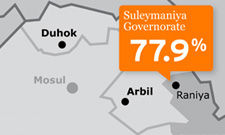
Stop FGM has praised the Kurdish government for assuming a public stance against these appalling examples of violence against women. On the International Day for the Elimination of Violence Against Women last year, WADI (the Association for Crisis Assistance and Development Co-operation), a German NGO, published an alarming survey showing that among elderly Kurdish women, the rate of FGM stood at 100%, demonstrating that in the past the procedure was universal. The same document disclosed that in three governing districts of the KRG, women in Erbil had suffered FGM at an average rate of 63%, those in Suleimaniyah 78%, and female residents of Garmyan/New Kirkuk 81.2%.

Earlier this year, the Kurdistan High Religious Commission (KHRC) issued a fatwa, after the argument of Al-Qaradawi which stated that FGM is not obligatory in Islam, but may be performed on girls according to their parents' wishes. WADI strongly criticised the fatwa, predicting that it would encourage an increase in the abusive practice. WADI further noted that other human rights monitors praised the fatwa as "positive, but not definitive" because it denied the Islamic basis of FGM but did not prohibit it.

At the end of October 2010, the Kurdish Health Ministry announced a plan to outlaw FGM and to call on the KHRC Fatwa Committee to unequivocally forbid the practice.

Nevertheless, repudiation of FGM as an Islamic procedure means little without consequential measures to prevent its continued outrage against girls. In 2007, the Kurdistan Justice Ministry decreed that women performing FGM should be arrested, tried, and punished by local police, but the regulation has not been noticeably enforced. Again in 2008 and 2009, Kurdistan authorities introduced anti-FGM legislation and promised public education to abate the practice, but nothing visible has yet been done to end it.

FGM is banned in many countries, including in Africa, where local authorities fail to enforce the law. FGM and so-called "honour" murders are a significant blot on the reputation of Iraqi Kurds and on the Kurdish people in general. Action by the Kurdish Regional Government to do away with these atrocities is long overdue and must follow promises made to foreign representatives and activists for women's rights. In addition, Kurdish and other Muslim religious officials must condemn FGM -- not only as a custom without basis in Islam, but as a violation of Islamic principles and general human rights.