













 original text
Combating female genital mutilation in Iraqi Kurdistan
By Haje Keli
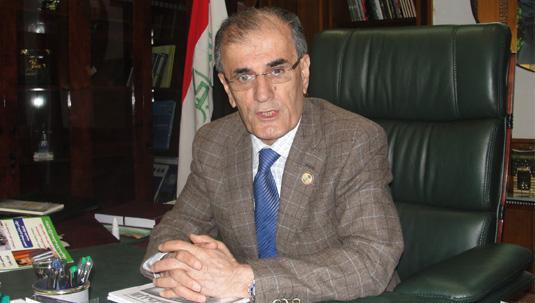
As the first organization in Iraqi Kurdistan to open a women’s shelter, WADI is an authority on women’s issues in the region, an area of great concern to any activist or observer concerned with true democratization and respect for human rights. When the organization’s “Nawa center” opened in 1999, the social acceptance for such an institution was scarce, and the group’s volunteers faced daily challenges of various types. In some people’s eyes, women's shelters are seen as institutions that break up homes, and the female beneficiary is believed by those people to be bringing shame upon her family. Furthermore, even the employees of the organization have faced ridicule for their efforts. Mr. Falah Murad Khan, the director of WADI’s office in Sulaymaniyah, Iraqi Kurdistan, laughingly recalls an incident where he was phoned by an anonymous caller telling him that he should be ashamed that, as a man, he was working on "feminine" affairs. This was after Mr. Khan appeared on a radio show talking about WADI’s efforts to fight female genital mutilation.
In a region plagued by various issues of gender discrimination, WADI has devoted much of its efforts as of late to one particular, serious issue: female genital mutilation. This practice involves partial or total removal of the external female genitalia, which more specifically includes partial or total removal of the clitoris and the labia minora. This painful surgery is customarily performed on women usually between the ages of 4 and 12, without regard for medical concerns or sanitation. The procedure itself is customarily done by a woman using a razor or knife, and no anesthetic is provided. Following the cutting, the woman’s bleeding wound is covered with ash and sometimes icy water is used in an attempt to control bleeding. The victim of this procedure may indeed bleed to death or contract a potential lethal infection.
This phenomenon has been widely discussed over the last few years in Kurdistan; although no one has ever provided any real data regarding the number of Kurdish women who have been victimized in this awful way. This changed in 2003, when WADI sent out teams of workers to knock on the door of every house and ask the women if they had been “circumcised”. This bold idea bore fruits, as the different teams discovered disturbing tendencies among the rural population of Kurdistan and then developed a plan of action to address this issue.
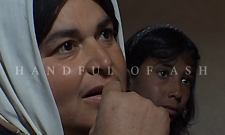
WADI assembled teams consisting of specially trained employees and assigned them to different areas such as Raniya/Qaladize, Germiyan, Erbil and Sulaymaniya. These teams, consisting of only women, traveled around villages and knocked on doors, seeking to inform the people about genital mutilation. The first year of the project was dedicated to using data obtained to map the various areas that have been specifically affected by trends of female genital mutilation. The teams began contacting women in certain villages, gathering them to view a film produced by the organization about genital mutilation. The film is a sort of documentary where doctors and religious scholars speak of negative effects of genital mutilation. The doctor in the film speaks about the damage done to women from a medical point-of-view, while the Islamic cleric states that it is non- Islamic to circumcise girls. There are also women in the film, victims of genital mutilation, who share their painful experiences. After viewing the film, there was time for a discussion among the women, and according, to WADI’s employees, some of them realized that genital mutilation was a bad thing and stated that would not put their own daughters through it.
The following year the WADI teams went back to the same homes and spoke to the same women that they had met who were shown the film, with the purpose of finding out if the women had indeed spared their daughters from circumcision, or if they had succumbed to pressure from the rest of the village. The film would be shown again, but now the WADI teams would concentrate specifically on the unconvinced women. The third year, the teams yet again went back to the villages they were assigned to the first year and spoke with the same women from the last two years. From 2005-2008, the WADI teams visited a total of 84 villages.
As the American-led war against Saddam Hussein approached in 2003, the WADI organization trained groups of workers to provide immediate assistance to internally displaced women and children as a result of the war. When it became obvious that the war did not impact women and children in the Kurdistan autonomous region, the organization switched its focus and traveled to various villages to see what sort of aid women were in need of. This is when the teams discovered that females in many of Kurdistan’s rural areas had similar stories of post-circumcision complications. Many of the village women had been genitally mutilated, and reported that, as a result, they suffered physically and sexually.
A major long-term - indeed lifelong - complication of so-called circumcision is that women lose a sense of sexual desire. Unfortunately, not everyone sees this as a negative consequence. Mr. Khan explained, “This is not seen as a problem, as sex is viewed as being for the enjoyment of the man only.”
In 2004, the teams of WADI spoke to 1,500 women in the Germiyan region, and 907 of them admitted to being victims of female genital mutilation. At the same time, the team assigned to the Erbil region discovered that 380 of the 440 women they spoke to subject to the practice.
Four female employees of WADI present during the meeting in Sulaymaniyah told various stories about the people they met and discussions they had during the course of their work. During their many meetings with the women of villages, they discovered that some women were mutilated during their wedding day. They had also been told that some women had been mutilated so badly that parts of their inner thighs had been sliced off in the process.
One would hope that the local government would be the first in line in addressing the serious issue of female genital mutilation. Sadly, according to Mr. Khan, the Ministry of Health and the Ministry of Endowments and Religious Affairs were, at first, very open to collaboration with WADI, but after all the plans were set, they withdrew their support. According to Mr. Khan, the Ministry of Health claimed that the statistics presented by WADI were inaccurate, and it was impossible that so many females could have been subjected to genital mutilation. Mr. Khan explained that the sudden reluctance of the ministries to cooperate with WADI might be because the government sees this sort of work as possibly generating bad publicity for the region.
Regardless of the difficulties facing those who seek to combat female genital mutilation, there is actually a glimmer of hope. The WADI teams have discovered that, after fighting genital mutilation for years, there is now, in some areas, a certain stigma attached to the practice. The younger generation, upon choosing a wife, will ask her if she has been “circumcised”. If she has been, she becomes less desirable because now men know that a woman sexual urges decrease substantially as a result of this mutilation. Many men in the younger generation want their wife to enjoy sex as much as they do.
WADI is taking a special approach in tackling this serious societal problem, as, year-after-year, they work with the same people. The people who viewed the film about the genital mutilation were contacted the following year and the year after to see if they had “changed” their minds. This approach has the likely affect of giving those contacted a sense of importance and motivates them to be a more active part in this focused, individualized effort. At the same time, it provides for reliable data concerning the efficacy of WADI’s approach to education on the issue of female genital mutilation. One will hope that they can continue in their efforts despite the various obstacles that lie in their way, and receive increased support from both governmental and non-governmental groups to expand their efforts. It would be a true victory for Kurdish society if the practice of female genital mutilation could soon become a thing of the past.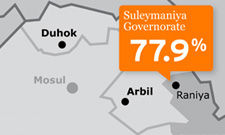
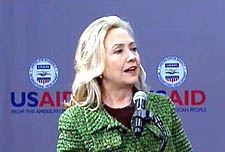 Clinton: 'Cultural Tradition' is No Excuse for Female Genital Mutilation