













The Traditional Celebration of March the 8th is criticized
The statistics about violation against women are increasing; however efforts to stop those behaviors are not successful.
Ala Latif
Hawlati Newspaper
While In Kurdistan Region the 103 anniversary of the International Women’s Day is celebrated, most women in the region are not aware of the history of that day. Zhwan is Sulaimani University students said this about the day; “The anniversary is reminding me with the slogans and lip services of the women’s organizations that are sold to women at that very day and everything is then forgotten in their archives.”
Women are Still Killed despite 18 Years of Calling to Respect Human Rights
Compared to the 103 years of struggle by the leadership of women movements after 8th of March, women and civil society organizations in Kurdistan , specifically after the 1991 upraising, spent the last 18 years advocating for women rights. Despite identifying their root causes, women are still killed and their rights are undermined through gender based violation.
Tama Shukur is a writer and intellectual. She says; “We as Kurds are talking a lot about 8th of March and Valentine’s Day, but we are not rolling our sleeves and go to work to find those basic mechanisms that may solve or reduce the extent of the problem. Everyone in our society is entitled to the freedom of speech and says whatever s/he wants, but action should match the rhetoric. We are claiming democracy in our region but we behave un-democratically with each other. This is clearly obvious in the functioning of the political parties and parliament in our country”.
Falah Murdakhan from the German Wadi organization says; “following the upraising, there was a golden opportunity for the Kurdistan Region to emerge as a model for the entire Middle East through fighting a host of harmful traditions in our society. But the silence toward killings, violence against women and Female Genital Mutilation (FMG), and the failure to seriously tackle those issues through new legislations and modernization of the existing laws, is putting question marks on the lip services and appealing slogans by the political elites over the past years.”
In Kurdistan the ruling political leadership is calling for respecting human rights and civilizing the society, but at the same time women are suffering as victims of a host of violent mistreatment.
Khasraw Saya, a member of the political bureau of Kurdistan Workers Communist Party, says;” Kurdistan society is civilized and urban, freedoms are the expectations of people, but the political power is totally regressive, tribal and masculine. The media of the political parties are focusing on songs, literature and art in addition they are in love with priests, Shaiks, and closed minded people. They forced regressive provisions in the constitution and legislations of this country. There are laws for Peshmarga and production, but there are no ones for protecting the basic human rights of women. People are civilized but the power is not and it is against the freedoms and rights of people. The mere fact that polygamy is legal is proving that women are regarded and treated as second citizens. Besides, legislations by the Parliament are confirming that women are treated as marketable products which are traded by the rich as sex tools.”
Despite Identifying their Causes, Violence against Women is Continuing
The celebration of 8th of March in Kurdistan is ongoing in a complicated situation for women. The statistics are indicating a surge in killing, violence, FGM, and self-burning of women. Those data are seriously putting the efforts of civil society organizations and government directories investigating those issues under serious questioning. Why despite their efforts, those violations are still occurring?
Taman Shakr, is attributing the causes of those violations in Kurdistan Region to the absence of social justice and says ‘There is social injustice in Kurdistan which is the reason why the problem is getting more widespread day after day. I happened to hear in a media program that 3684 mosques exist in Kurdistan , is this comparable to the number of the schools? Most of the women exposed to violence are poor and the governorate is who to be held responsible for their sufferings”
Taman, continues; “If we are seriously considering the 8th of March, everyone should feel responsible for the tremendous problems facing women in Kurdistan today. Large numbers of intellectuals and writers publish regarding women issues in the papers, but how many of them actually respect women’s rights in their personal life, how many of them respect the rights of their own wives and sisters. This is a conundrum that is complicating women’s issues even more”.
FGM is the most Dangerous type of Violence against Women in Kurdistan
Falah Muradkhan, the director of the German Wadi NGO –which collected data and produced documentaries on FGM in Kurdistan- is attributing the surge in the practice to the dominance of religious ideas in the society. He further explains; “One of the reasons for practicing FGM is that most of the population is following the teachings of the Shafae’ sect. Therefore we see a large ratio of the practice in those areas in which people follows this particular sect compared to elsewhere. The teachings of the sect is very influential, therefore the practice is widely committed and is spreading”
Muradkahn is pointing out that the decreasing rates of the practice in some parts of Kurdistan like Germian for example should not give a false sign of hope, because in fact the practice is surging in other parts like Rania, Peshdar, Qaladize.
The ratio of FGM in Kurdistan
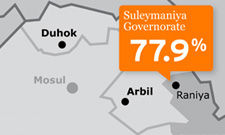
Wadi data shows that the in 2008 the ratio of FGM in Kurdistan was 76% of the total female population. The largest is in Peshdar (Rania and Qaladezae) area. The ratio in that area is 94-97%. The practice is so widespread that among 2317 participant of a survey in a total of 31 villages, 2184 of them underwent the procedure. In Qaladizea, in a total 75 villages and the participation of 1704 individuals, 1659 of them were circumcised.
What Is the Parliament doing to Prohibit FGM?
The Women Rights Protection Committee in the Parliament prepared a bill to prohibit FGM. But because of the majority male members of the committee the bill never passed.
Kwestan Muhammad a member of the committee, is attributed the failure to adopt a resolution in the parliament to the following; “A large number of the members of the parliament were against discussing the issue in parliament. This attitude is due to a range of factors including the sensitivity of the issue and the conservative male members’ embarrassment of discussing such an issue. This was unfortunately reinforced by some media and public calls for forgiving the Parliament from addressing FGM, claiming that it is not part of the Parliament responsibility to do that. Despite those hurdles, we in the Parliament were successful in introducing three resolutions aiming at the lawful prohibition of FGM.”
The Female Members of Parliament are not Proactive in Addressing Women’s Issues
Women constitute 25% of the total number of Parliament’s members. However, those members failed to work on behalf of women in the Kurdish society. Taman Shakir says “I think the political power, including members of the Parliament, is not immune from the dominant cultural believes and traditions widely followed and practiced in our society. Should the Parliament was a genuine representative of people and not just delegating political parties, and Should Open Lists for elections were practiced, the potential of electing qualified individuals who could advocate and introduce laws that protect human rights would be a possibility.” Regarding the female members of the Parliament she commented; “It is extremely frustrating to see female members of the Parliament who failed to be a strong voice in advocating women’s rights. Those very women are representing me and you; the victims of violations against our rights. The very fact that some female members of the parliament voted for introducing polygamy as a law is not only frustrating for us but also should be the stimulus for more activity in that regard”.
The Female Members of the Parliament Advocate Introducing Laws against FGM
The question here is if introducing laws against FGM is both advocated by women’s civil society organizations and female members of the parliaments, why such bills were not introduced so far.
Kwestan Muhammad says “As members of the Parliament we are not denying the responsibility for tackling this issue, but over the last 3 years it was impossible to achieve more than we had so far”
The Parliament is Neglecting the Implementation of Existing Laws
The Parliament was able to introduce specific articles in the Personal Status Laws. However, it was not successful in providing enforcement mechanisms of those laws which were never implemented. The Parliament is not denying its failure to enforce them.
Kwestan Muhammad says “We were negligent and we admit our failure in practicing oversight over the executive bodies of the government to enforce those provisions. It would be an overestimation to claim that we perfectly did our job. If that was the case, women would not have beaten, circumcised, burned, their education rights violated, forced to marry, and their ears, noses been cut or even killed over romance and love.”
Kwestan, continues in addressing their shortcomings “Our failures are due to our inability to realize the existence of the scope of the issues. Even if we did know about the issues, the bureaucracy of the Parliament and its committees are creating hurdles for addressing them seriously”
How to Limit the Scope of FGM
The Director of the German NGO Wadi, is recognizing a host of mechanisms to prevent and control FGM. He says “First there should conduct advocacy campaigns to introduce laws prohibiting FGM, and to exert pressure on the executive branch of the government to implement those laws. Numerous legislations in Kurdistan are issued but are not executed. Secondly, our communications with the Parliament and Ministry of Health showed positive signs of the wilingness to implement a 5 years program in cooperation with other related Ministries. The basic activity of the program would be establishing a joint committee consisting of representatives of the Ministry of Health, Education, Religious Affairs, Culture and Civil Society Organizations.”
Looking forward Falah Muradkhan says “We have an agreement with Hawalti, Awene, Rojnama Newspapers to establish an independent media campaign committee. We invite other media channels to join us. We are looking forward to conducting awareness and educational media campaigns through this cooperation”
Some are Against Introducing Laws against FGM
Khasraw Saya says “It’s essential to start a grass root initiative to stope FGM and violence against women. It is useless to introduce legislations prohibiting the practice, whereas there are other laws that permit polygamy and other ones that are based on the Islamic Sharia laws. FGM and other harmful practices against women are rooted in Islamic provisions and have religious incentives. As far as religion is a dominating and influential force in society and family lives, those practices will stubbornly persist.”
Regarding the practical steps that would stop FGM, Khasraw Saya says; “In order to prevent and stop those practices, it is essential to separate religion from politics, government and education. Furthermore, it is essential to introduce sex educational materials starting from elementary schools. In addition, students should be educated about the legal consequences of conducting such practices.”
Others single out the failure to implement laws and legal provision pertaining to FGM. Taman Shaker says in that regard “The law can be respected all only if there is oversight and monitoring of its implementation. Furthermore, it is essential to have an independent judiciary which is immune from the influence of political parties and the government.”
The Role of the Directorate of Monitoring Violence in limiting violence
The Kurdistan Regional Government established the Directorate for Monitoring Violence in the three governorates of Erbil , Sualimani and Duhok in an attempt to undermine violence against women. The records of the directorate show successful intervention in preventing beating, killing, self-burning of women. They further indicate the ability of the directorate in achieving a degree of gender equality in the society.
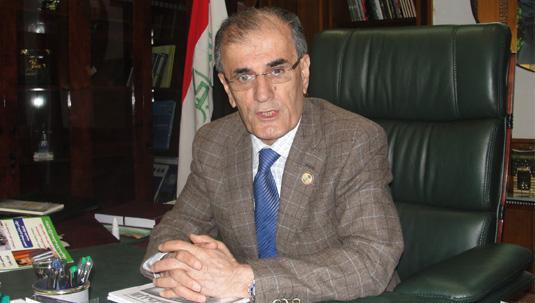
Colonel Nerman Abdulla, the Manager of the Directorate says the following regarding women’s issue in Kurdistan; “The situation of women in Kurdistan can be characterized as miserable. The violations against women are heartbreaking” to ameliorate and prevent this situation he assures that; “We want to let women know that they are not alone, you [the women] have the support and protection of the government. This Directory is aiming at addressing your issues. To achieve that we in the directory are in need for your readiness to engage in claiming the responsibility to defend your rights.”
The idea of establishing centers to protect women from violence by the government is not a new idea. This model was used by women civil society organization in the 90s of the previous century.
Women’s Protection Center are Regards as a Government Business
The Director of Wadi says; “Women shelters and protection centers existed in 1999 they didn’t have parallels in the entire Middle East . In the beginning the idea was not appealing for the government and main political parties, so they were not supportive. In 2009 the same government is adopting the idea and establishing centers for the same purpose. It would have been very productive if the government supported the already existing centers since the 90s. This would have prevented many of the acts of violence against women over the last 10 years.”
Regarding the support of government for those shelters and protection centers the director further says; “There are numerous centers that are serving the same purpose but not only are unassisted but also treated suspiciously by the government and there were evidence of undermining and limiting their influence.”
Khasraw Saya is accusing the government for using those centers as profitable business to raise funds. He says; “Instead of using them to protect women, the government is using the shelters to raise money. Whatever positive influence the shelters may have was due to public pressure. The continuous hardship of women is a proof for the ineffectiveness of the shelters. Should those women protection centers and shelters were genuinely aimed at protecting women; we would have seen a decline in the rates of killing and burning of women.”
Data regarding Violence against Women in Kurdistan
In 2008 alone, in both Erbil and Dohok governorates, about 300 women exposed to killing, choking, and burning. In the meanwhile about 500 were found guilty and detained for charges of violence against women. According to the Directorate of Monitoring Violence against Women’s statistics show that 1775 cases pertaining to women issues were recorded in Erbil and Dohok governorates in 2008 alone. Following the investigation of those cases, 921 of them were closed without a solution. The remaining cases are still under investigation and were not resolved.
Based on the same annual report, in 2008 and in both governorates 78 persons were indicted. Execution and prison for life were among the rulings.
Dohok governorate comes in number one for the ratio of women who were exposed to killing and choking attempts or deliberately killed In January 2008. Four cases were recorded for that month and 23 for the entire year. Compared to 2007 in which 62 cases were recorded the ratio was lower. There were 495 cases of violence against women in the governorate in 2008. Those are divided among Killing, burning, sexual violence, torture and complaints. Among those 309 cases were closed based on judicial decisions, 186 are still under investigation and 162 persons were indicted and jailed due to those cases.
The Directorate of Monitoring Violence against Women in Sulaimani kept data for only the first 6 months of 2008. Based on those statistics, 91 serious cases, and 208 minor ones were recorded. In Germian Area, 21 serious and 75 minor cases were recorded.
Conferences and Seminars Addressing Women’s Issues are Useless
The women’s civil society organizations are holding seminars, meetings and workshops to discuss women’s issues in Kurdistan Region. The conferences are graded as successful at their conclusion by the organizers. But the rates of violence against women are stubbornly increasing.
Regarding that matter Tama Shaker says; “Those conferences may prove useful and influential for specific geographic areas and audiences. But they are a waste of resources and lip service in general. The success of any similar activity may be measured by the extent of its influence on their beneficiaries and target population. The best indicator of success is the reduction in the ratios of killing of and violence against women. The reverse is true regarding the trends of violence against women. The reality is that some of the women civil society activists are influential and proved their ability to tackle women’s issue. Most of them, however, are using the issues to pursue selfish personal gains.”
How to Limit Violence against Women?
There has been extensive dialogue and discussions of the nature and causes of violence against women. The mystery though is the mechanisms that are effective in prevention given the context of those atrocities against women.
In regard to those mechanisms, Taman Shakr says; “there are a number of potentially successful mechanisms, one is working on involving more males and the society in general in the discussions. The aim would be to convince the other side of the equation of the rights of women and their equality with men. Second would be providing opportunities for women to be economically sustainable and independent. This can prove an effective mean for advancing women’s rights.”
Taman further discusses another mechanism and says; “Intellectual and educational empowerment of women should be given more attention. Women should be given the opportunity to be aware of the fact that they are not destined to suffer from violence. This would serve to empower them to advocate against and resist atrocities committed toward them. Targeting education and families will help advance this noble cause. This requires saving women issues from the monopoly of political parties and involving enlightened and independent individuals”.
Khasraw Say adds to this; “The struggle of people in general and women in particular given this context is the only avenue for reforms. Such a struggle should target overturning the legalization of polygamy and introducing legislations that at least guarantee a humane approach to family life. The large number of seminars and conferences proved unsuccessful in achieving that. Involvement of women in this struggle is the only choice left to reverse the political power’s anti-women policies”
Khasraw Saya proposes a state with a constitution that is under the continuous scrutiny of individuals, the public and civil society organizations. Khasraw Saya declares the following regarding the role of the political power in the increase of rates of violence against women; “The political power itself is violating the very laws and legislations they introduce. Therefore the women’s movement should emancipate itself from the influence of political parties and should be confident enough to challenge the political establishment. Reforms could only be achieved through confronting the political power and demand reforms; otherwise there is no hope for change from within the system itself”.Translation from Kurdish: Goran Sabeer Abdullah
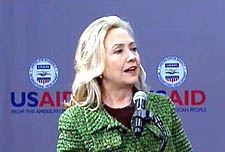 Clinton: 'Cultural Tradition' is No Excuse for Female Genital Mutilation