










AKNEWS | 23.08.2010
Painting exhibition to campaign against FGM in Kurdistan
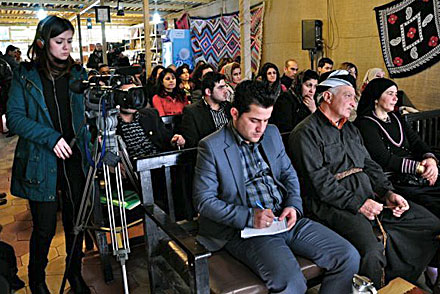
A painting exhibition was opened in Qaladze town on Sunday, 135 km north east of Sulaimaniya...
FACEBOOK.COM | 15.08.2010
Kurdish Cleric defends FGM as religious practice
Surgeon: Types 1 and 2 of FGM are medically permissible...
FACEBOOK.COM | 13.08.2010
FGM - The Unsolved Riddle?
FGM has attracted a lot of attention after the publication of the HRW report, which came...
AKNEWS | 02.08.2010
Religious fatwa on FGM prcatices may have negative consequences, says NGO
The representative of a German nongovernmental organization, WADI, stated the issued Fatwa...
RUDAW.NET | 02.08.2010
Circumcised Girls Have Less Marriage Chance in Kurdistan
Muhammed Hassan, 22, is a single man who says one of the qualifications that his girlfriend...
guardian | 05.07.2010
The razor and the damage done: female genital mutilation in Kurdish Iraq
Mixture of motives persuades villages to maintain practice that often leaves lasting effects on...
time.com | 30.06.2010
Report: Female Circumcision in Iraqi Kurdistan Still High
For many young girls in the world, a life-changing experience might be reaching puberty or...
GLOBALPOST | 21.06.2010
Shocking statistics on "female genital mutilation"
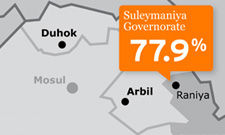
Female circumcision a good idea? Ask 73 percent of Kurdistani women...
DAILYBEAST.COM | 17.06.2010
The Plight of Women in Northern Iraq
Violence in Iraq has abated. But in Kurdistan in the north, women continue to suffer. A new report...
New york times | 16.06.2010
Kurdistan Is Urged to Ban Genital Cutting
SULAIMANIYA, Iraq: Human Rights Watch urged Kurdistan’s government on Wednesday to...
Los angeles TIMES | 16.06.2010
Human Rights Watch slams high rates of female genital excision in Iraqi Kurdistan
“I still feel the fear,” Runak recalled as she told her story of undergoing genital excision at...
Human Rights Watch | 16.06.2010
Iraqi Kurdistan: Girls and Women Suffer Consequences of Female Genital Mutilation
Kurdistan Regional Government Should Outlaw the Practice...
Human rights watch | 15.06.2010
Pictures about FGM in Kurdistan and the work of WADI
A significant number of girls and women in Iraqi Kurdistan suffer femalegenital mutilation (FGM)...
The lancet | 06.03.2010
Reports focus on female genital mutilation in Iraqi Kurdistan
Campaigns against female genital mutilation have mainly targeted African nations, where most...
UNHCR | 03.03.2010
Women's Rights in Middle East and North Africa 2010: Iraq
Iraqi women's rights advocates, men and women alike, began their struggle for equality...
HUDSON NEW YORK | 03.03.2010
"Such Hadiths Are Not Confirmed To Be Authentic"
The repellent and, in too few countries, prohibited, practice of female genital mutilation (FGM)...
DE Volkskrant | 24.02.2010
Meerderheid van Koerdische vrouwen in Irak is besneden
Besnijdenis van meisjes komt op grote schaal voor onder de Koerden in het noorden... (dutch)
The Kurdish Globe | 21.02.2010
FGM, once a taboo now a breached silence
Encouraged by houses built by the KRG, Kulajo residents return home...
IWPR.NET | 11.02.2010
Female Circumcision Ban Urged
New survey reveals that majority of women in Kurdistan have undergone genital mutilation...
RUDAW.NET | 24.01.2010
HRW: Kurdistan fails to combat female circumcision
The recent 20th annual World Report of Human Rights Watch criticizes the Kurdistan Regional...
STOP FGM BLOG | 21.01.2010
The latest Human Rights Watch World Report
Human Rights Watch mentions FGM in Iraqi-Kurdistan twice in its latest World Report...
KAMEEL AHMADY | 01.2010
A message from Iran
I have a message from Iran for you, written in a simple language, away from the many big words...
BRITISH EMBASSY, IRAQ | 12.2009
Working to Reduce Female Genital Mutilation in Kurdistan
Female Genital Mutilation (FGM) is recognised internationally as a violation of the human rights...
FACEBOOK ARTICLE | 12.11.2009
Female Genital Mutilation is NOT an African problem!
Due to the tireless work of the organisation WADI e.V. the dimension of Female Genital Mutilation in Middle East becomes more and more clear...
TROUW | 12.11.2009
In deel Koerdistan zijn bijna alle vrouwen besneden
Ruim 85 procent van de vrouwen in het Koerdische noorden van Irak is besneden, uit traditie of in naam van de islam... (dutch)
KURDISH HERALD | 05.09.2009
Ms. Arian Arif – a woman's strength cannot be hidden
If you entered a room full of women, she would instantly be the one who captures your attention...
KURDISH HERALD | 04.08.2009
Combating female genital mutilation in Iraqi Kurdistan
As the first organization in Iraqi Kurdistan to open a women’s shelter, WADI is an authority on women’s issues...
Al arabiya | 23.06.2009
Research: Most of women in Iraqi-Kurdistan are circumcised
Relief organization started campaign against FGM … (arabic)
WARIS DIRIE FD. | 16.06.2009
FGM in Iraq
Northern Iraq - Human rights organisation WADI estimates that 60 % of women in Iraq are subjected to FGM ...
IWPR | 03.06.2009
Combating female circumcision
Activist describes challenges facing those trying to end the controversial practice in Iraqi Kurdistan....
RADIKAL | 24.05.2009
Nereden çıktı bu kadın sünneti?
Alman sivil toplum örgütü WADİ'nin haritasına göre kadın sünneti, Türkiye'nin ...
JEZEBEL.COM | 16.04.2009
Nigeriens, Iraqis Denounce Female Genital Mutilation
10 villages in Niger have publicly denounced the practice and...
THE ATLANTIC | 14.04.2009
Face of the day
Iraqi Kurdish four-year-old Shwen screams during her circumcision in Suleimaniyah on April 14, 2009...
EXPONTOMAGAZINE | 3.2009
Dat zal ik mijn eigen dochter niet aandoen
Als Wadi, een vrouwenrechten organisatie, in 2007 met schokkende cijfers over... (dutch)
ROSITAV.COM | 3.2009
Genital mutilation of Southern Kurdistan (3)
With the genital mutilation of girls at an early age is to control the future of women's feelings and sex drive...
RADIO FREE EUROPE | 10.03.2009
Female Genital Mutilation said to be widespread in Iraq's, Irans's Kurdistan
Tahereh vividly remembers the day in her native town of Marivan in Iran when she was circumcised...
HAWLATI | 08.03.2009
The Traditional Celebration of March the 8th is criticized
While In Kurdistan Region the 103 anniversary of the International Women’s Day is celebrated...
TROUW | 05.03.2009
Koerdische media verbreken zwijgen rond vrouwenbesnijdenis
Voorpagina van de Koerdische krant Hawlati. Hawlati neemt het voortouw in de publieke campagne... (dutch)
RADIO NEDERLAND | 20.02.2009
Kurdistán combate la ablación del clítoris
La circuncisión femenina está avanzando en Kurdistán, en el norte de Irak, según un informe... (spanish)
ROSITAV.COM | 2.2009
Genital mutilation of Southern Kurdistan (2)
With the genital mutilation of girls at an early age is to control the future of women's feelings and sex drive...
ROSITAV.COM | 2.2009
Genital mutilation of Southern Kurdistan (1)
With the genital mutilation of girls at an early age is to control the future of women's feelings and sex drive...
18.1.2009
Recently Published Articles about FGM in Iraqi-Kurdistan
We are glad to present here translated excerpts from various Kurdish newspapers, to update you on the...


IRIN NEWS - UN | 02.02.2006  original text

Middle East: FGM still largely an unknown quantity in Arab world

In a recent statement released to coincide with the day of Zero International Tolerance of Female Genital Mutilation (FGM)on 6 February, the UN Children's Agency UNICEF noted that the Arab world had yet to make decisive moves in the eradication of the practise.

In a reference to Egypt, Sudan, Somalia and Djibouti, the press release went on to note that "so far, FGM prevalence rates of over 90 percent of women and girls have remained virtually unchanged for the past decade."

In the case of Egypt and Djibouti, those bald statistics mask a growing resolve on the part of local government and civil society to combat the phenomenon.

Following the example of the National Council for Childhood and Motherhood, over a dozen Egyptian NGOs are doing what one senior Cairo-based UN official called "a wonderful job" raising awareness of FGM through seminars and the media. Both Cairo and Alexandria universities are collaborating in the development of national campaigns.

Early in February 2005, at a conference organised by the government and international NGO, No Peace Without Justice, Djibouti announced the ratification of the Maputo Protocol, which bans FGM. After sometimes fierce discussions, participants finally agreed that no justification for the practise could be found in the teachings of Islam.

Yemen, where FGM levels in some regions are known to reach 50 percent, is another example where progress is being made. A January 2001 ministerial decree banning FGM, combined with government and NGO concentration on the worst-affected areas, have, in the words of Jordan-based UNICEF communication officer Wolfgang Friedl, "considerably reduced the frequency of the practise in the space of only a few years."

Further north in the Middle East, the record is considerably more patchy. Hampered by its policy of following up on an issue only if the local authorities themselves consider it important enough to investigate, the UN's statistics on FGM peter out on the Egyptian-Israeli border.

Yet FGM is known to be practised throughout the Arabian peninsular, particularly in northern Saudi Arabia, as well as in southern Jordan and Iraq. A recent survey by the German NGO WADI, based in the Iraqi Kurdish city of Sulaymaniyah, showed well over 60 percent of women in the rural area of Germian, about 150 km southwest of city, had been circumcised.

There is also circumstantial evidence to suggest that FGM is present in Syria. Then, of course, there is Iran. Given the frequency of the phenomenon in the tribal areas of Iraqi Kurdistan immediately adjoining the Iranian border, and the population's close familial and cultural links to the Kurds further east, it is only logical to assume FGM exists there too.

The problem, as one senior UN official well acquainted with the Middle East told IRIN, is the attitude of the region's governments. The coverage - or rather non-coverage - of FGM, he argued, can be compared to campaigns to stamp out honour killings.

"We know both Jordan and Syria have a problem with honour killing," he said. "But while Jordan is implementing new legislation forcefully, Syria simply does not want the issue to get out."

It's a point put more bluntly by Thomas von der Osten-Sacken, director of WADI.

"There is a clear link between freedom of expression and knowledge of FGM," he told IRIN in Istanbul. "If we know the phenomenon exists in Egypt, Jordan and Iraq, it is because these countries have an embryonic civil society."

The same, added the senior UN official, cannot be said for Saudi Arabia.

"Issues of FGM and violence against women in general are not open to discussion within the country, let alone to UN agencies," he said. "I can only hope the recent changes in the political environment there will enable us to find an entry point."

The one shining exception to the general lethargy impeding efforts to combat FGM is Iraqi Kurdistan, where women's organisations like the Sulaymaniyah-based Rewan have been fighting to reduce the practise since the region broke away from Baghdad in 1991.

Following its small-scale study in Germian, WADI is now on the verge of starting a survey of the whole of the Iraqi Kurdish region. Training of local students who will be doing the bulk of the field work is due to begin on 1 April. Research will be done during the summer holidays in order for the results to be published in November in Kurdish, Arabic and English.

"We're aiming to interview 1 percent of the total population of Iraqi Kurdistan," Osten-Sacken told IRIN. "That should provide the basis for a proper campaign to stamp the practise out.