














 original text
For Kurdish Girls, a Painful Ancient Ritual
The Widespread Practice of Female Circumcision in Iraq's North Highlights. The Plight of Women in a Region Often Seen as More Socially Progressive
by Amit R. Paley
TUZ KHURMATU, Iraq
Sheelan Anwar Omer, a shy 7-year-old Kurdish girl, bounded into her neighbor's house with an ear-to-ear smile, looking for the party her mother had promised.
There was no celebration. Instead, a local woman quickly locked a rusty red door behind Sheelan, who looked bewildered when her mother ordered the girl to remove her underpants. Sheelan began to whimper, then tremble, while the women pushed apart her legs and a midwife raised a stainless-steel razor blade in the air. "I do this in the name of Allah!" she intoned.
As the midwife sliced off part of Sheelan's genitals, the girl let out a high-pitched wail heard throughout the neighborhood. As she carried the sobbing child back home, Sheelan's mother smiled with pride.
"This is the practice of the Kurdish people for as long as anyone can remember," said the mother, Aisha Hameed, 30, a housewife in this ethnically mixed town about 100 miles north of Baghdad. "We don't know why we do it, but we will never stop because Islam and our elders require it."
Kurdistan is the only known part of Iraq --and one of the few places in the world--where female circumcision is widespread. More than 60 percent of women in Kurdish areas of northern Iraq have been circumcised, according to a study conducted this year. In at least one Kurdish territory, 95 percent of women have undergone the practice, which human rights groups call female genital mutilation.
The practice, and the Kurdish parliament's refusal to outlaw it, highlight the plight of women in a region with a reputation for having a more progressive society than the rest of Iraq. Advocates for women point to the increasing frequency of honor killings against women and female self-immolations in Kurdistan this year as further evidence that women in the area still face significant obstacles, despite efforts to raise public awareness of circumcision and violence against women.
"When the Kurdish people were fighting for our independence, women participated as full members in the underground resistance," said Pakshan Zangana, who heads the women's committee in the Kurdish parliament. "But now that we have won our freedom, the position of women has been pushed backwards and crimes against us are minimized."
Zangana has been lobbying for a law in Kurdistan, a semiautonomous region with its own government, that would impose jail terms of up to 10 years on those who carry out or facilitate female circumcision. But the legislation has been stalled in parliament for nearly a year, because of what women's advocates believe is reluctance by senior Kurdish leaders to draw international public attention to the little-noticed tradition.
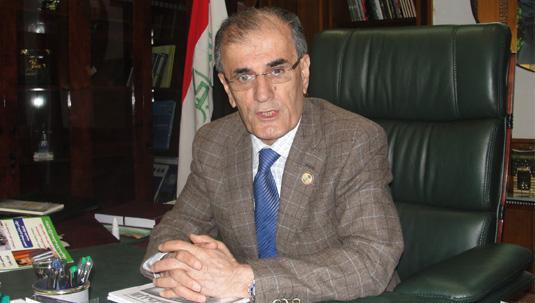
The Kurdish region's minister of human rights, Yousif Mohammad Aziz, said he didn't think the issue required action by parliament. "Not every small problem in the community has to have a law dealing with it," he said.
The practice of female circumcision is extremely rare in the Arab parts of Iraq, according to women's groups. They say it is not clear why the practice -- common in some parts of Africa and the Middle East -- became popular with Iraqi Kurds but not Iraqi Arabs.
Supporters of female circumcision said the practice, which has been a ritual in their culture for countless generations, is rooted in sayings they attribute to the prophet Muhammad, though the accuracy of those sayings is disputed by other Muslim scholars. The circumcision is performed by women on women, and men are usually not involved in the procedure. In the case of Sheelan, her mother informed her father that she was going to have the circumcision performed, but otherwise, he played no role.
Kurds who support circumcising girls say the practice has two goals: It controls a woman's sexual desires, and it makes her spiritually clean so that others can eat the meals she prepares.
"I would not eat food from the hands of someone who did not have the procedure," said Hurmet Kitab, a housewife who said she was 91 years old.
Kitab, who lives in the village of Kalar in Kurdistan's eastern Germian area, where female circumcision is prevalent, has had the procedure done on herself and all her daughters. When asked if she would have her 10-month-old granddaughter Saya circumcised, Kitab said "Of course" and explained that the procedure is painless.
"They just cut off a little bit," she said, flicking her finger at the top part of a key, which she then dropped on the floor.
Women's rights groups in Kurdistan are working eagerly to change the perception that the procedure is harmless and that it is required under Islam. They go to villages in rural areas where the practice is most ingrained and tell women and religious leaders of the physical and psychological damage the circumcision can cause. Health experts say the procedure can result in adverse medical consequences for women, including infections, chronic pain and increased risks during childbirth.
Ghamjeen Shaker, a 13-year-old from the Kurdish capital of Irbil, said she is still traumatized from the day she was circumcised. She sits with her legs clenched together and her hands clasped tightly on her lap, as if protecting herself from another operation. Indeed, Shaker says she sometimes dreams that the midwife who circumcised her is coming back to perform the procedure again.
She was 5 when her mother sent her out to buy parsley and then locked her in the front yard of their home with six other girls. "I knew something bad was going to happen, but I didn't know exactly where they were going to cut," she recalled. "My family just kept saying, don't worry, this is a social custom we have been doing forever."
"They pinned me to the ground, and I just cried and cried," said Shaker, who spoke barely above a whisper. "I was just so astonished. But now I realize that they want to prevent women from living their lives normally."
Her mother, Shukria Ismaeel Jarjees, a 38-year-old housewife, said she was forced by her relatives and elderly women in the community to have her daughter circumcised. "I made a huge mistake, and now my daughter is always complaining of pain in her pelvis," Jarjees said. Her eyes began to fill with tears. "I now advise my daughters to never circumcise their children."
Shaker hopes to become a social worker focusing on women's issues, in particular other girls traumatized by female circumcision.
"I want to make sure the world understands they cannot silence girls like this," she said.
Susan Faqi Rasheed, president of the Irbil branch of the Kurdistan Women's Union, said that even in the cosmopolitan capital, as many as a third of young girls are circumcised. "When the Kurds hold on to something, they hold on to it strongly," she said. "So now they hold to Islam more than the Arabs."
One of the religious leaders who have been less vocal in demanding female circumcisions is Hama Ameen Abdul Kader Hussein, preacher at the Grand Mosque of Kalar and head of the clergymen's union in Germian. Previously, he preached that female circumcision was required. Now he says it is optional, which Hussein believes has caused the area's rate of female circumcision to drop from 100 percent to about 50 percent.
"If there is any harm in this exercise," he said, "we should not do it."
Despite the outreach efforts, a study of women in more than 300 Kurdish villages by WADI, a German nongovernmental group that advocates against female circumcision, found that 62 percent underwent the procedure.
In Tuz Khurmatu, the most famous practitioner of female circumcision is Maharoub Juwad Nawchas, a 40-year-old midwife with traditional Kurdish tattoos covering her chin. She learned from her mother, who used to perform the procedure for free, though Nawchas now charges 4,000 Iraqi dinars, or just under $3.50, because her husband is disabled and can't work. She has circumcised about 30 girls a year for the past two decades.
On the day she circumcised Sheelan, the midwife began the ritual by laying down an empty white potato sack to serve as her working area. AK-47 assault rifles hung from the wall of the dingy concrete house, and watermelons rested below.
When Sheelan entered the room, her mother, Nawchas and a local woman placed the girl on a tiny wooden stool the size of a brick. The midwife applied yellow antiseptic to her pelvic area and injected her with lignocaine, an anesthetic. Little children peeked through the window to see what the noise was about.
"It's all right, it's all right," Sheelan's mother whispered, as the girl screamed so loudly her face turned red. She tried to bunch up her skirt over her pelvis and shield the area with her hand, but the women jerked her arms back.
Then Nawchas uttered the prayer, made a swift cut, and immediately moved the girl over a pile of ashes to control the bleeding.
The entire ritual took less then 10 minutes.
Back home, Sheelan lay on the floor, unable to move or talk much. She clutched a bag filled with orange soda and candy and barely said anything except that she was in pain.
But she became more animated when asked whether it was worth it to have the operation so her friends and neighbors would be comfortable eating food she prepared. "I would do anything not to have this pain, even if meant they would not eat from my hands," she rasped slowly.
"I just wish that I could be the way I was before the procedure," she said.
Staff photographer Andrea Bruce and special correspondents Nian Ahmed and Dlovan Brwari contributed to this report.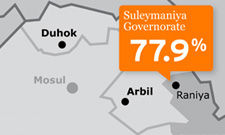
 Clinton: 'Cultural Tradition' is No Excuse for Female Genital Mutilation